Falling Behind: The Economic State of Black Men, 2025
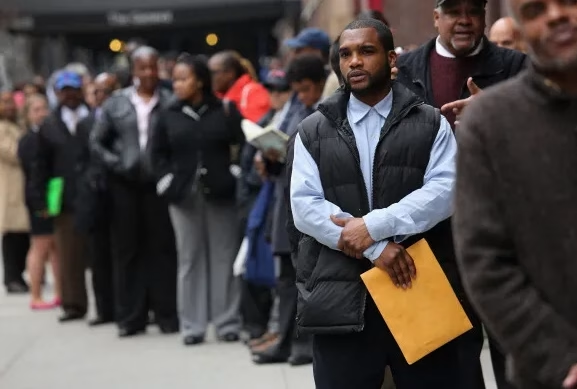
Black men are often left out of the conversation when it comes to their economic and social position in the United States. As a second pillar in a household and often the primary breadwinner, their contribution shouldn’t be overlooked, but alas, I have to write this because they/we are. With over 600,000 black men entering unemployment since November 2025, some experts expect the number to climb to a million by November 2026.
There is a palpable degree of financial security and stability that Black men can provide in an era of rising costs, inflation, and global turmoil. Their absence may equal a structural and sustained collapse of black communities. At the same time, Black men continue to face persistent socio-economic disparities, particularly in perceived criminality and educational capacity.
Understanding the economic realities faced by Black men is essential for shaping policies that support economic mobility, wealth accumulation, and long-term financial security. Or you know, the vibes… I really don’t think people care about Black men in society anymore. It’s Sink or Swim out here, and most don’t know how to swim.
Table of Contents
A Few Good Black Men: Population and Demographics
Black men and boys constitute a slight minority of the Black population in the United States. There are approximately 20 million Black men and boys, making up about 49 percent of Black people.
Overall, roughly 41 million Black people live in the U.S., accounting for about 12.4 percent of the total population. The population of Black men is also relatively young. At 34.3 years, the median age of Black men is younger than that of white (~45) and Asian men (~37), but older than that of Hispanic men (~30). Additionally, approximately 26 percent of the Black male population is under the age of 18, reflecting a youthful population structure that will continue to shape future workforce participation and economic outcomes.
Based on recent 2025 data, the life expectancy for Black men in the US is approximately 69 to 72 years, which is notably lower than that of other demographic groups, often 4 to 5 years less than that of white men. The key factors contributing to this disparity include, but are not limited to, higher rates of prostate cancer, chronic health conditions, and structural factors.
“As a Black millennial, I have less than 30 years to go?“
Education and Workforce Participation of Black Men
Degrees and Direction
Approximately 21.2 percent of Black men have attended college and earned a bachelor’s degree or higher. However, enrollment has been on a decline. Less than 50 percent of black male high school graduates enrolled in some form of college after graduation.
As of 2024, women complete college at higher rates than men across every major racial and ethnic group in the United States. The gap is especially wide among Black adults, where women outpace men. Among adults in the labor force, about 22.8 percent of Black women hold a bachelor’s degree, compared with roughly 21.2 percent of Black men, a gap of approximately 0.6 percentage points.
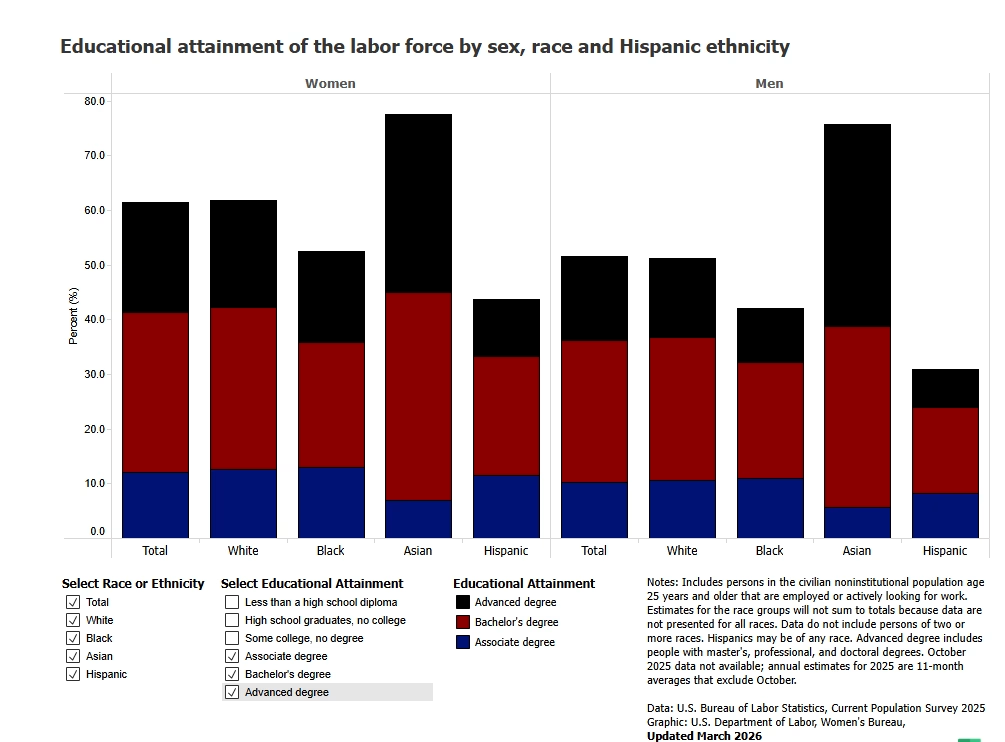
Black men’s college attainment still falls below that of some other men’s groups. In the same age group, about 33.1 percent of Asian men and 26.2 percent of white men hold a bachelor’s degree, while Hispanic men hold roughly 15.8 percent. Asian women were the highest at 38.1 percent.
About 9.8 percent of Black men in the labor force hold an advanced degree, compared with about 16.6 percent of Black women. However, Black men remain less likely than white and Asian men to hold an advanced degree. About 14.4 percent of white men and 36.9 percent of Asian men hold an advanced degree, while Hispanic men hold 7 percent.
The Financial Burden of Being Underemployed
As of February 2026, the latest available data from the Bureau of Labor Statistics, the unemployment rate for Black or African American workers rose to 7.7 percent, up from 7.3 percent in January. This figure represents a significant increase over the past year and remains the highest among major racial groups.
Black men remain the least active participants in the U.S. labor force, sustaining double-digit unemployment compared to the national average. The Black unemployment rate over the last decade has experienced historic volatility, dropping to a record low of 4.7 percent in April 2023 after reaching over 16 percent during the 2020 pandemic.
According to data from the U.S. Department of Labor and the Bureau of Labor Statistics, about 65.6 percent of Black men participate in the labor force, meaning they are either working or actively looking for work. This rate is lower than that of Hispanic men (about 75.1 percent), Asian men (about 76.8 percent), and white men (about 68.2 percent).
Within the Black population, about 62 percent of Black women participate in the labor force, reflecting a relatively modest gender gap of roughly six percentage points. By comparison, gender gaps in labor force participation are significantly larger in other racial and ethnic groups. For example, the participation rate for Hispanic men exceeds that of Hispanic women by roughly 18 percentage points, while the gap is about 16 percentage points among Asian Americans and approximately 12 percentage points among white Americans. These differences contrast with the much smaller gap between Black men and Black women.




Income, Wealth Gap, and Retirement Security
Despite gains in education, Black men continue to face persistent disparities in income and wealth relative to white and Asian men.
Black men earn less on average than white and Asian men and slightly more than Hispanics in the United States. According to the U.S. Bureau of Labor Statistics, the median weekly earnings of Black men working full-time in 2025 were about $1,039, compared with $1,780 for Asian men, $1,354 for white men, and $1,003 for Hispanic men.
Black men and women ($942) have the greatest gender pay parity in terms of income for the major racial and ethnic groups. Black women make roughly less than $97 in weekly earnings than Black men. In totality, these earnings differences contribute to broader disparities in annual household income with a lasting impact on wealth accumulation.
Estimated Household Income and Wealth in 2025
Based on 2024-2025, the estimated median income for Black households was about $55,000, compared with about $84,000 for white households, about $120,000 for Asian households, and $72,000 for Hispanic households. While median household income increased for most racial and ethnic groups between 2024 and 2025, Black households stagnated.
Retirement savings also reveal significant challenges.
Only 41 percent of Black adults have at least three months of emergency savings, compared with 60 percent of white adults. Black men (who have access) have an average 401(k) balance of $145,000, significantly lower than the $403,000 for white men and $379,000 for Asian men.
On average, white households hold more than twice the retirement savings of Black households. High-income Black households are more likely to struggle with debt, which hinders the ability to save and often forces early retirement.
Older Black men are significantly more likely to experience poverty in retirement than men in other racial groups. 54 percent of Black Americans don’t have enough savings to retire securely.
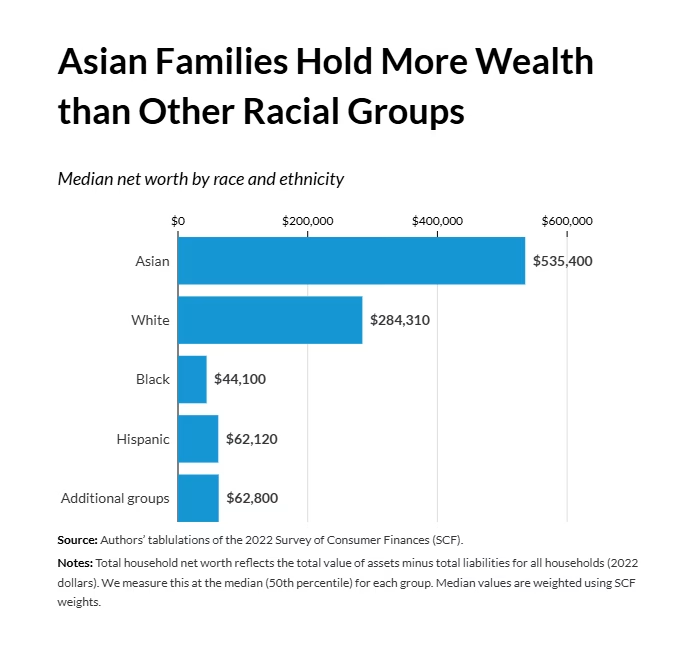
By my estimates, the 2025 median black household net worth is approximately $53,840, compared to Asian households at $690,500, White households at $355,820, and Hispanic households at $78,994. This should be in line with an overall national median wealth increase of 20 percent since 2022, driven by 65 percent investment gains and 35 percent increases in home values. Ownership is wealth. Not being able to buy in is a problem.
The Dilemma and the Solutions for Black Men
Black men continue to make gains in education; however, substantial disparities in income, wealth, and retirement security remain. These patterns suggest that progress in human capital and workforce engagement has not translated into equal economic outcomes. Black households overall struggle with homeownership and with accumulating wealth-producing assets.
While challenges remain numerous, the solutions are also available. Focusing on in-demand fields before college, as well as ownership in quality assets beyond entry into the workforce. Besides that, additional income opportunities. In other words, Black men need to lock in on purpose, vision, and direction. Again, the solutions are often simpler than being ineffective under limited time constraints.
The Power of Compounding Example
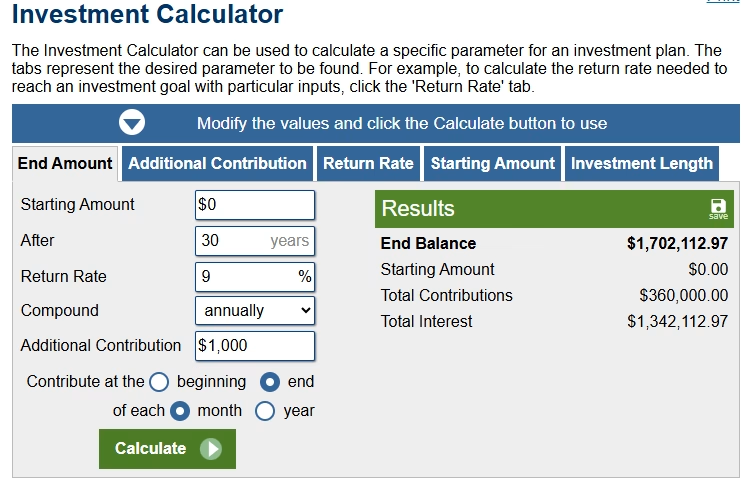
Investing 25 percent of gross income from the onset, even with a $55,000 salary, invested monthly at the annual rate of return of 9 percent for 30 years, would yield $1.7 million. That’s over $1.3 million in capital gains interest with a total investment contribution of $360,000. It’s possible to make moves even with a lower salary.
Budgeting is still one of the greatest tools in life. Investing is the second best. Others are still holding out for reparations. While many more have been pushing for political gains for at least 40 years. There are a lot of roads to success. Some are effective, and some are ineffective.
Different Routes
In the end, the financial empowerment route is my take on the situation. My household went from negative $150,000 to multi-millionaire status in less than 12 years. Generally, duplicable steps too, while the results may vary using the net max financial plan.
One of the most qualified people we should be turning to is Dr. Vincent Edward Oluwole Adejumo (University and Public Lecturer, Author of The Return of Black Nationalism and the Death of White Supremacy). There are others like Camari Ellis and Jimmy Williams of the Black Wealth Rebels show.
About Author




One Comment
DONALD JOHNSON USMC/RET
The article does an excellent job grounding the conversation in facts: population size, median age, life expectancy, education levels, and workforce participation. These details paint a fuller picture of Black men as a young, capable, and essential demographic whose economic stability influences the health of Black communities at large.