
Going Beyond $2.6 Million in September to Close Out 2026
After a disastrous July (-$210,125), we were coming off a solid August (+$154,670 Net Worth Boost). The irrational bull run spilled into the first trading week, peaking mid-month. What the hell happened? Unemployment revisions? Did we get inflation down? Nope, just tech muscling through. Artificial Intelligence fears are mounting, prompting governments around the world to rebrand. The US federal government changed it to “Super Intelligence.” I still think “Quantum Computing” is more appropriate. No, not quantum physics; more like powerful computing and analysis. I was told that I was wrong, but since it’s not the hill that I’m dying on, I’ll just continue to make money off the market just in case.
Beyond all of that, prices are up on just about everything; it’s ridiculous. We are holding above 3 percent with a high likelihood of another interest rate increase late Q4 2026. Despite it all, NVIDIA found a way to pull us to a victory (again). Gaining roughly 3.4% to 5%, the company is hovering near $5.6 trillion. Meta had an exceptional month, netting +26%, its strongest monthly return run since 2022. Micro Technology also helped with its +375% year-over-year revenue. In translation, we have anywhere from 2% to 4% gains to close out the year.
My wife and I are almost investment portfolio multi-millionaires. Due to return-to-office (RTO) mandates, our early retirement plan was fast-tracked (2032). All that’s left for 2026 is healthier living, a fall trip to Peru and Colombia, holidays, and a reunion with our dog (Brownie). The pup has been spending time with grandma in Florida.
This year has been filled with challenges and extra expenses. Time to close out and ramp up into 2027. Things change like the seasons; you have to be nimble and change, too. Learn to mix and match your options and lead with gratitude.
Table of Contents
September Shenanigans and Median Incomes

Although I knew it was coming, I still managed to freeze like a deer staring at headlights.
Financial experts also knew it was coming. While August was choppy, the hunt for the bottom of September was real. The September Effect refers to the historically weak stock market returns observed during September. September has been the worst-performing month, going back nearly a century.
The Federal Reserve stepped up to slow down inflation. However, even a 25-basis-point hike doesn’t seem to stop US consumers.
American households aren’t helping one bit. Last I heard, some people are pulling out home equity and/or draining their retirement accounts.
The US personal savings rate in August 2026 was 4.1% (down 0.5% since 2025). The average household’s 2024-2025 monthly expenses were $6,545 (up $105 from the prior year).
To make matters worse, the average credit card balance rose to approximately $6,659 per borrower, with total national revolving credit card debt reaching $1.26 trillion.
The Algebra of Household Income?
The average American home continues to save less (near record lows) while spending more on credit (record highs). That’s a recipe for long-term financial challenges. 94% of US households have depleted their extra savings and now have less cash on hand than in March 2020. Demand remains too high and productivity too low, which drives prices higher. The Algebra of Household wealth is not improving, even though US Median Income has increased by 2.6%.
Here are some key figures:

- Pre-Tax Median: $87,460 (up 2.6% from $85,210 in 2024).
- Post-Tax Median: $76,060 (up 3.1% year-over-year).
- Overall, this median income increase represents +2.5% higher than the 2019 peak ($85,320) when adjusting for compounding inflation.
Other notable figures:
- Income by Race and Ethnicity:
- Black Households (+4.8%),
- White Households (+3.0%), while
- Asian and Hispanic Households’ changes between 2024 and 2025 were not statistically significant.
- Asian median household incomes historically trended highest around $126,300,
- non-Hispanic White around $96,710,
- Hispanic around $73,260, and
- Black around $59,980.
- Income by Age Group/Generation: 25-34 (Gen Z) $94,880 (+$2,640), 35-44 (Millennial) $114,100 (+$5,500), 45-54 (Gen X) $120,100 (+$500), 55-64 (Gen X and Boomers) $99,320 (+$5,550), and 65+ (Boomers) $59,680 (+$1,800).
In the end, the recession still hasn’t hit. Income is increasing, but so is your spending. It’s a soft but rocky landing with middle-class dreams as casualties. While the poor are limited in the cash they have to get them in trouble, the middle class covers that up with debt. Borrowing from your future self equals 3.5x more in the long run for the same item today. The rolling recession is here, and you will feel it sooner or later. This is especially poignant for those who aren’t investing.
The future belongs to owners.
Following the News, People Panicked. But We Survived?
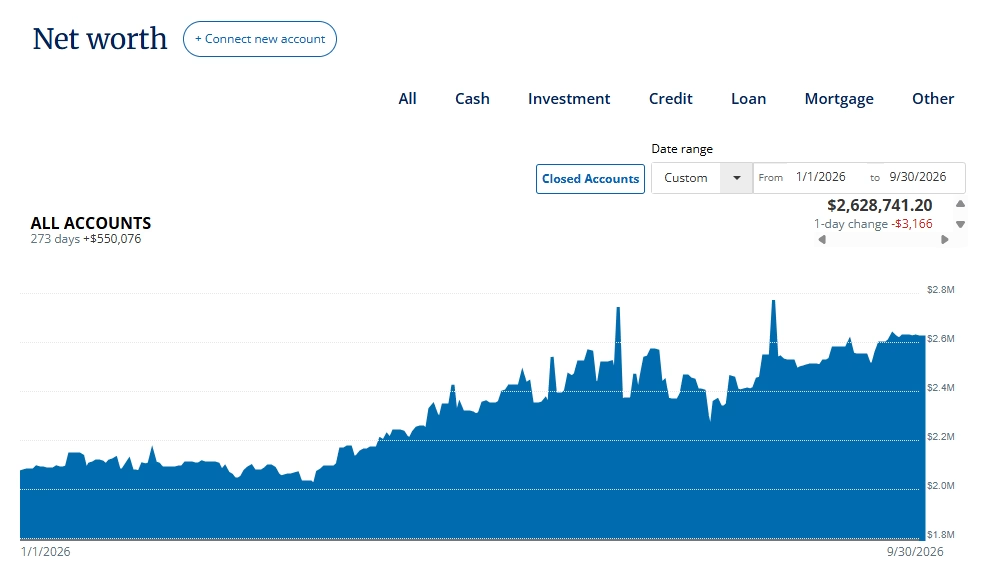
Our household net worth clawed back from $2.6M to close at +$94k for September (see below). No matter the outlook, we are playing the long game. A downturn is another opportunity for dollar-cost averaging (DCA) in quality companies. We were over-leveraged on tech and carried too much Nvidia. However, we have been re-balancing. Selling high positions and buying into lower-performing sectors such as health, energy, and financial.
There is always the next opportunity if you aren’t overly tied to the last opportunity.
If you are new to investing, the goal is to BUY LOW and hold for dear life (#HODL). Long-term stock investments typically outperform shorter-term trading (day trading), which attempts to time the market. Over an investing period of about 40 years, missing the ten best days would cost you about 50% of your capital gains (profits). That’s a lot of money.
Avoid the issue by investing in the Vanguard S&P 500 ETF (Ticker Symbol: VOO). It’s diversified and lets you participate in the overall market. The S&P 500 fell 0.4%, yet is still up 12.8% year-to-date. This means that VOO is up 11.76% for the year.
Our Investment Holdings Performance for the Year, So Far
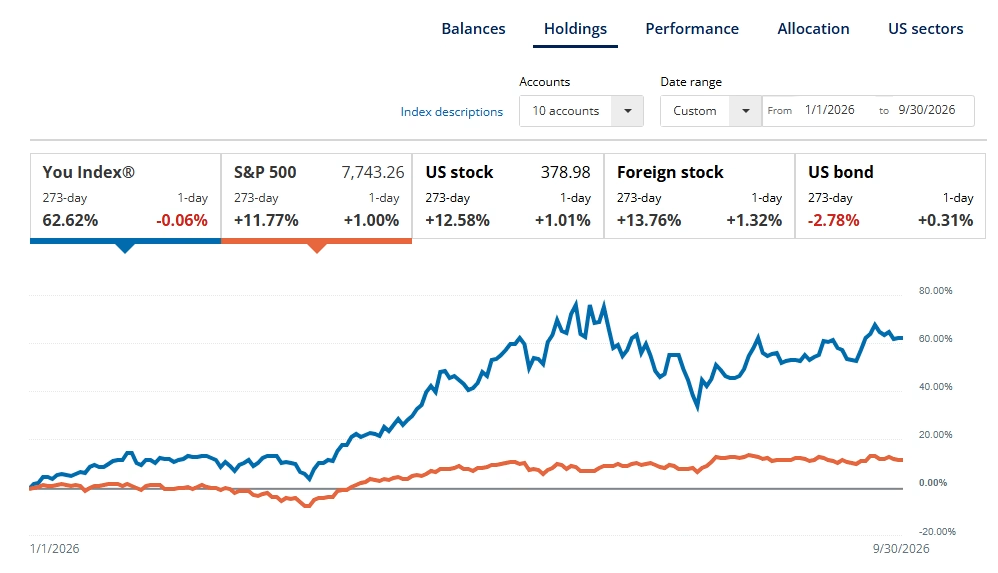
As you can see above, our household portfolio dropped in Q2 (June 29) but went on a tear. The stumble is because our beta is way too correlated with tech stocks. The holdings’ performance makes more sense for me to track, but the last rollover glitched the portfolio performance. Long story, but we are up about 32% for the year overall. Our holdings are beating the general S&P. It’s been a drag, but this is where winners buckle down.
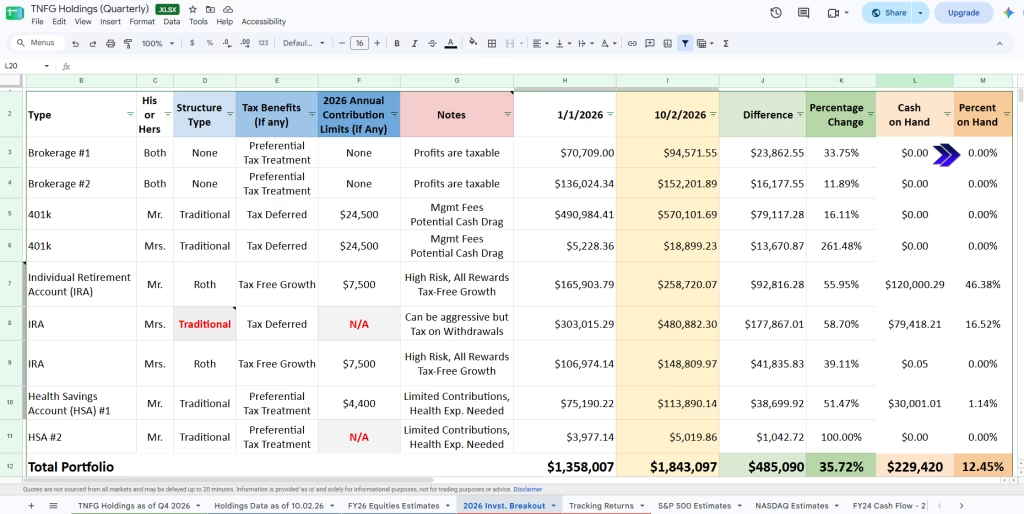
To think, we started with a $500 rollover into my 401k in 2014 when I got to DC. The portfolio is around $1.8M now; the net/max financial plan and our strategy are still the same (see breakdown below):
- Investing to match in the 401k,
- Paid down credit card debt aggressively,
- Increased my 401k contribution until max (i.e., limit $24.5k for 2026),
- Started to invest in a Traditional IRA (i.e., limit $7.5k for 2026) and Health Savings Account (i.e., limit $4.4k for 2026),
- Got more money back during tax season, and
- Reinvested some more.
Financial Changes Aren’t Convenient
While 2026 has been choppy due to emergency expenses, we are still rolling through the uncertain gauntlet. 2027 could be solid if the Mrs. doesn’t quit her job. She is still struggling with trying to be an overachiever. I happily settled into a B- or C+ employee. No one is getting a meaningful medal for crashing out at work. I wouldn’t recommend it if you aren’t getting paid at least $200,000 per year. For a lot of people, it would be best to guard your health, happiness, and peace of mind instead of dying on the job. It’s not worth the extra effort.
There is so much to do now. At this rate, we need to build up our savings. To do so, instead of crashing out to get there, our household favors an Emergency Plan over Emergency Savings. Time tested this theory, and the strategy held. From credit card points and HSA reimbursements, we were able to cover the cost. All with minimal direct impact on our overall wealth goals. We are easing back from our investment contributions to help keep credit card debt to a minimum. The catch-up contribution for our Roth IRAs will be available until April 2027. This is definitely not your uncle’s financial advice, but rest assured, we are multi-millionaires; we are good at money management.
Disasters and financial emergencies strike, and unfortunately, they will strike again. It’s unfair, but like a hurricane, it doesn’t discriminate. Cut back on unnecessary expenses and double down on getting an emergency savings plan. Financial literacy is not your enemy on this journey; it’s an ally.
So What’s New to TNFG? And Q4?
If you are new to my content, this blog post showcases the TNFG monthly Net Worth Breakdown for September 2026.
There are always usable financial nuggets and aha moments that might help you along the way.
High prices outside translate to spending more time indoors. I’m taking this opportunity to add kinetic weekend activities for the family. It’s high time we walk, play more badminton, go on fun runs, and hit the parks.
This is still a great opportunity to build better habits.
Check out TNFG’s Top 3 Best SMART+ER Goal books for inspiration.
Moving beyond September’s Emergency Mode
To avoid playing too close to the edge, here’s TNFG’s game plan:
- Get a new tire for our car prior to Thanksgiving
- Boost +$15,000 into the Savings Plan for 2027;
- Work with extended family for Wills and Estate Planning;
- Start re-stacking credit card rewards and miles through 2027;
- And settle with a +$2,500,000 investment portfolio by YE 2027
As things change, it’s best to learn to change with them. The primary intention is to draft the plan to help cement the ideas on paper. Secondly, my household goal is to build savings for emergencies, rental real estate coverage, and/or dry powder for investments.
Either way, having $50,000 on the side seems like a lot, but emergencies are costing more and more.
Rule of thumb for savings:
- No more than 3x months of expenses. For example, if your average monthly expense is $4,000, you would need $12,000.
- For families, especially if you rely on one income, that’s 6x months.
- If you are considering starting a business and quitting. I would highly recommend 1 year of savings. The caveat is that you go lean on expenses in a demo year to feel what it’s like first.
Even though the game is unfair, there are always rules. If there are rules, there is always a trick to the game. Hard and challenging times are par for the course. They will happen. To mitigate them, you have to stay vigilant and work towards better outcomes today.
Cutting Down Debt and Being Debt-Free
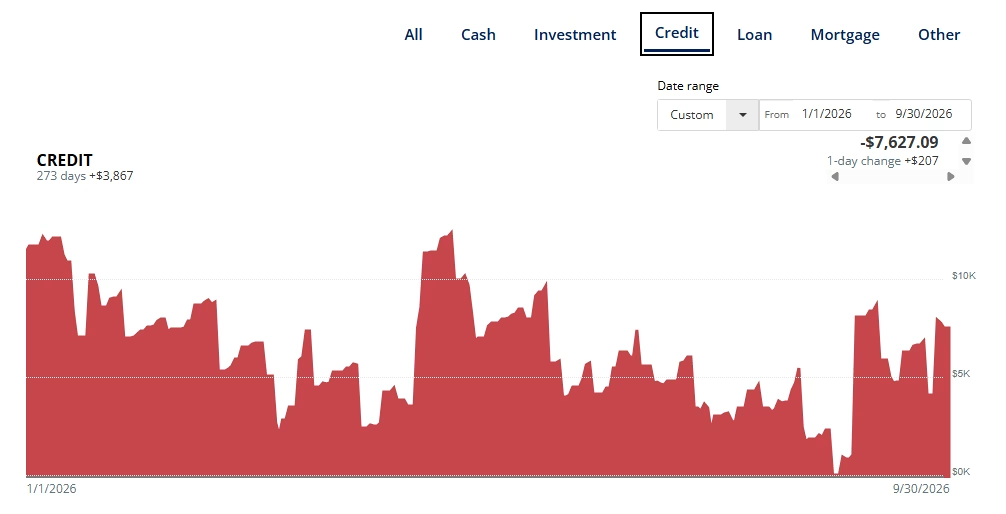
Higher-than-expected travel costs added to our consumer debt in 2026. We are making some changes this year and cutting down the balance. So far, our credit cards still pay us more than we pay them. Wealth is all about cash flow management; however, peace of mind is worth its weight in gold.
I kinda suck with people, so the fewer unnecessary transactions, the better.
Here’s the Monthly Wealth Summary:
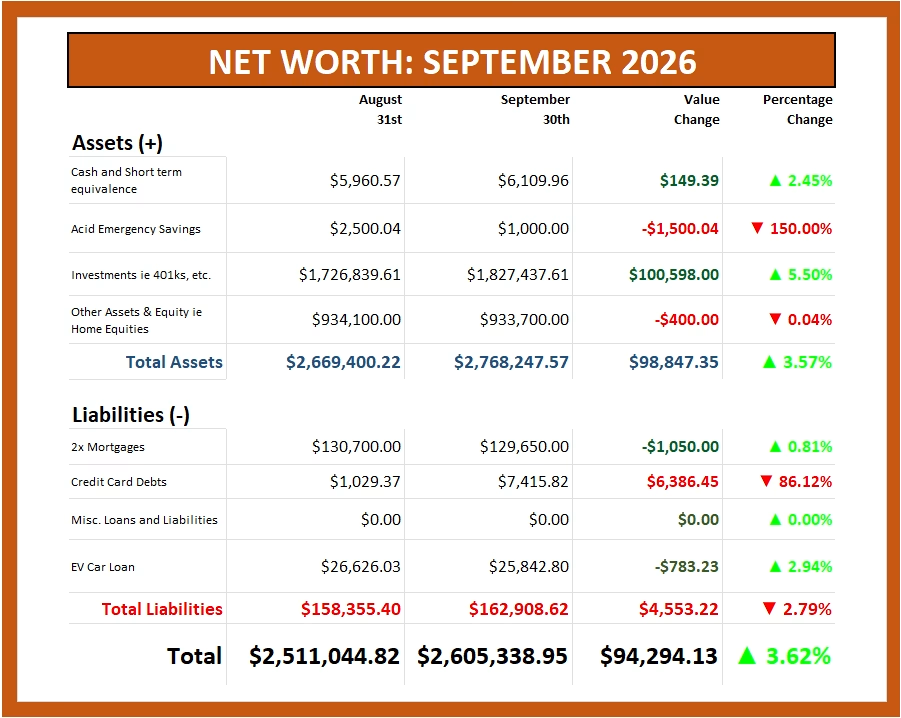
Started with a bit of fear, but our portfolio mix rose to the occasion. We closed at $2,605,339 net worth. We saw an increase in our net worth for September 2026 of 3.62%. A cash equivalent value of $94,294. Considering we were up an extra $50,000, a steady win is still a win in our book. Our financial journey took 2 years and one month to go from $1 million to $2 million. And yet in the last twelve months, we added over $500,000. The power of compounding good decisions is still helping us along the way.
Layoffs are still in the air. I have about four friends still unemployed, with the timeline for reemployment growing to over nine months. Since it’s election year, the potential for a government shutdown is minimal. It’s not non-existent but minimal nonetheless.
I’m anticipating a +3% rate of return for Q4 2026. October should yield around 1.25%. November is estimated to be the big winner at 2.6%. December will ease out with less than 1%.
What’s working toward wealth creation and what’s working against it?
Nearly $20k in Expenses (+50% over September 2025)
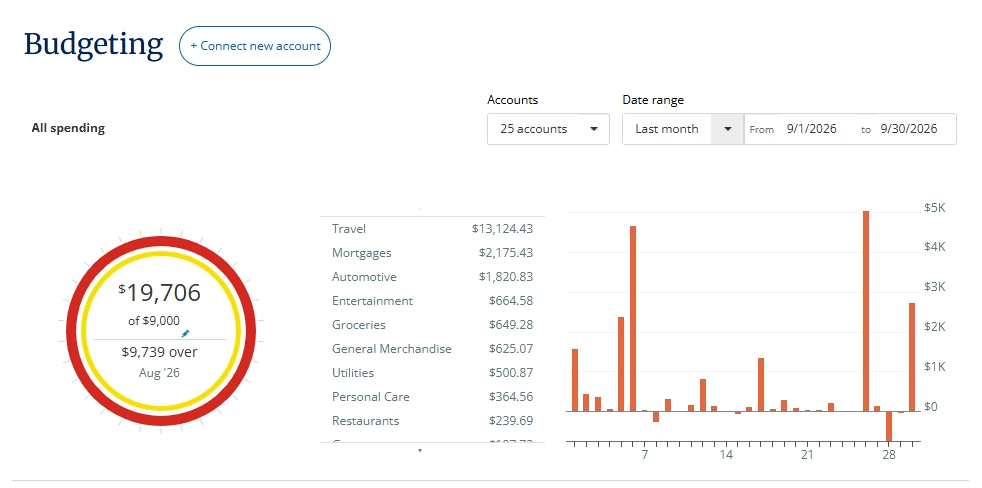
With prices going up just about everywhere, our expenses are reaching record highs. To be fair, most of that is due to pre-paying all Holiday travel and next year’s Brazil trip for Carnival. The price tag for Rio went up due to Carnival season. I highly recommend traveling off-peak and hitting up lesser-known spots like Floripa. Our hotel for 5 days in Rio hit a whopping $4.5k, while the Florianopolis (Floripa) part of the trip was less than $1k for the same number of days.
Specifically, we spent $1,821 for our auto loan and insurance. Reminder that newer cars are expensive. Our housing costs (for two homes) settle at around $2,175. Food costs stayed around $1,000 (with restaurants), which wasn’t too bad. Our in-town entertainment went up since we took a salsa class and headed to the Nat. Geo museum. Local restaurant dates are closer to $200 nowadays. Missing Brownie since he forces us to stay home. Outside is expensive.
That’s a lot of money.
Fortunately, even with a rental property, our combined housing costs are less than 25% of our take-home pay, which helps a lot. Sometimes making cuts to bigger ticket items like housing can give you a bigger advantage than your peers. For us, that advantage is about +$1,250 per month. That’s the best part of the net/max plan.
It holds up especially well against higher costs and inflation.

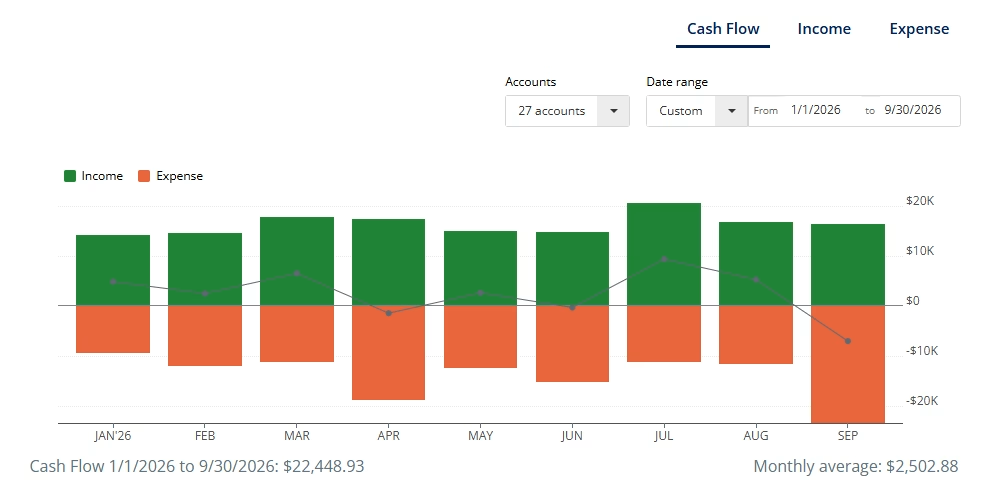
What are our next wealth-building steps to close out the year?
Time to brush up on Portuguese and Spanish in twelve months and “Unbig” my back.
Beyond that, here are our overarching goals for 2026:

- Keeping our expenses where they should be.
- All about “Not equating happiness and social acceptance with the money you spend.“
- Add $10,000 in M1 Finance, focusing on Growth and Passive Income that generates at least $7,500 in dividends in 2028.
- Check out the portfolio in real time. If you like the platform and want to start investing, I have a $ 50-for-$50 referral if you need it. Terms may apply – https://m1.finance/SYdqDJ2SyADC.
- Shooting for a sustained investment contribution rate to reach $2.5 million in investment assets (by December 2027).
- To help monitor your savings, cash flow, net worth, investments, retirement, and more, FREE with Personal Capital! Sign up with my link & get a $20 Amazon gift card. Terms apply. https://pcap.rocks/lawrencegonz
- Next travel season planning is on the way:
- Peru/Colombia
- South Carolina for fall
- Philadelphia in the New Year,
- Brazil for February 2027
- Texas for June
- Japan in October, followed by
- A European Christmas in Switzerland and France.

About Author


You May Also Like

How to Rekindle Love and Wealth During an AI Bull Market

The Next Recession and Taking Advantage of the Rebound