
Will Millennials’ Investments Soar by 100 percent by 2032?
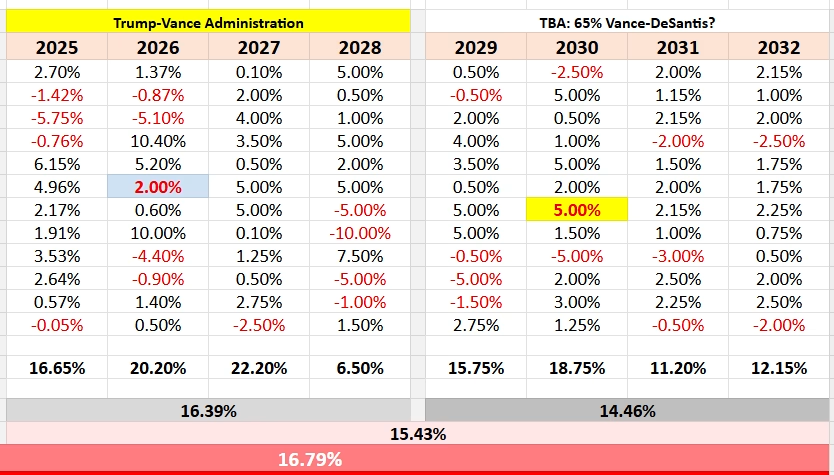
Millennials have entered the prime earning years, 30 to 45. It’s time to eat our vegetables. Also, investing is now as mandatory as morning stretching for our longevity. The last seven years have ushered in an expansionary cycle in which record profit margins are being reached, P/E ratios remain muted, and AI investing is in full swing. From January 1, 2017, through December 31, 2024, the S&P 500 generated an impressive cumulative growth of 235 percent. This equates to an average annualized return (avg. returns) of about 17 percent. Even with higher inflation and a reduced GDP growth outlook, we should still carve out 14 percent average returns.
With increasing earnings, sales growth, buybacks, and dividends as the main drivers of appreciation, a one-time investment of $100,000 should scale to nearly $220,000.
Table of Contents
Millennial and AI-driven Growth Cycle
“Demographics are destiny,” according to Fundstrat’s Tom Lee, who believes stock market returns will be strong for the next two decades as millennials drive the US economy to new heights.
Lee outlined his case for the S&P 500 to trade as high as 19,350 by 2038. This represents a potential upside of 225 percent from the November 21st close (5,948).
The long-term forecast is based on strong expected demand for homes and vehicles from millennials, as America’s largest generation begins to form families and enters its peak earnings years. Lee believes housing starts could surge to more than 2.5 million per year over the next decade, which has a strong multiplier effect on the broader economy. Annual housing starts have not reached 2.5 million since the 1970s.
“Millennials are going to be a major incremental and additive driver to US economic growth, and better growth equals better equity returns,” Lee explained.
Other Metrics for +125% Bullish Increase
Lee outlined four reasons why he recommends investors stay overweight equities, according to the note. Those reasons include the Fed remaining dovish, institutional investor cash on the sidelines hitting $3.2 trillion (which could ultimately flow into the market), a global economy emerging from “depression,” and millennials entering their prime years.
“This is why we are structurally bullish,” Lee said.
Lee went on to explain that since 1900, every single peak in the stock market has coincided with the peak of every single generation. “Coincidence? Maybe,” Lee said, but added that the equity peaks could be explained by the “consumption power” peak of every generation.
With the prime age (30 to 50) of the millennial generation not expected to peak until 2038, the stock market should have a long runway of future growth, according to the note.
The Next Bull Super Cycle through 2038? The answer?
Five fundamental factors will drive long-term stock returns: sales growth, changes in the share count (buybacks), margin growth, changes in the P/E multiple, and dividend yield.
The best-case scenario
“If demographics are destiny, US stocks will do very well,” Tom Lee concluded.
If you keep the dividend yield, buyback rate, and sales growth constant, you’d need to see both margins and P/E multiples go back to their previous highs to get an annualized return of 10 percent. Alternatively, if you assume that P/E multiples and margins remain at today’s (elevated) levels, then you’d need to see sales growth more than double and buyback or dividend rates go significantly higher to reach 10 percent. While this is possible, it’s arguably very optimistic as it would require the macroeconomic environment to be as supportive as it was over the past decade. Even then, the annual average return would be far lower than the 16.6 percent we saw over that period.
While the metrics look great, you should avoid over-optimism.
Although Nvidia beat its estimates in Q3 2025, investors are skeptical of the long-term explosive growth. Turns out, increasing your revenue year-over-year is not good enough. This sentiment sent stock prices plummeting 2 percent. Investors are fickle.
The most likely scenario
If you assume that a less stable economic backdrop would bring multiples and margins closer to their recent averages (but still higher), then you’re looking at making just 4-5 percent per year. This isn’t a pessimistic forecast: it assumes sales per share will grow at 4.8 percent, EPS at 3.8 percent, and the dividend yield will remain at 1.7 percent.
This rate of return is already much higher than the negative return you’d have expected at the beginning of the year using the same assumptions (which, by the way, highlights how much timing can add to your long-term returns – if you get it right), but it’s arguably much lower than what most investors expect.
An average annual gain of at least 7 percent from the S&P 500 looks probable in the next 20 years. However, don’t expect the S&P 500 to regain its peak annual trailing 20-year gain of 14 percent. This will be a slugfest for long-term investors, and it might require a more active approach to investing.
You can’t simply Index-and-Chill your way to wealth.
About Author


You May Also Like